


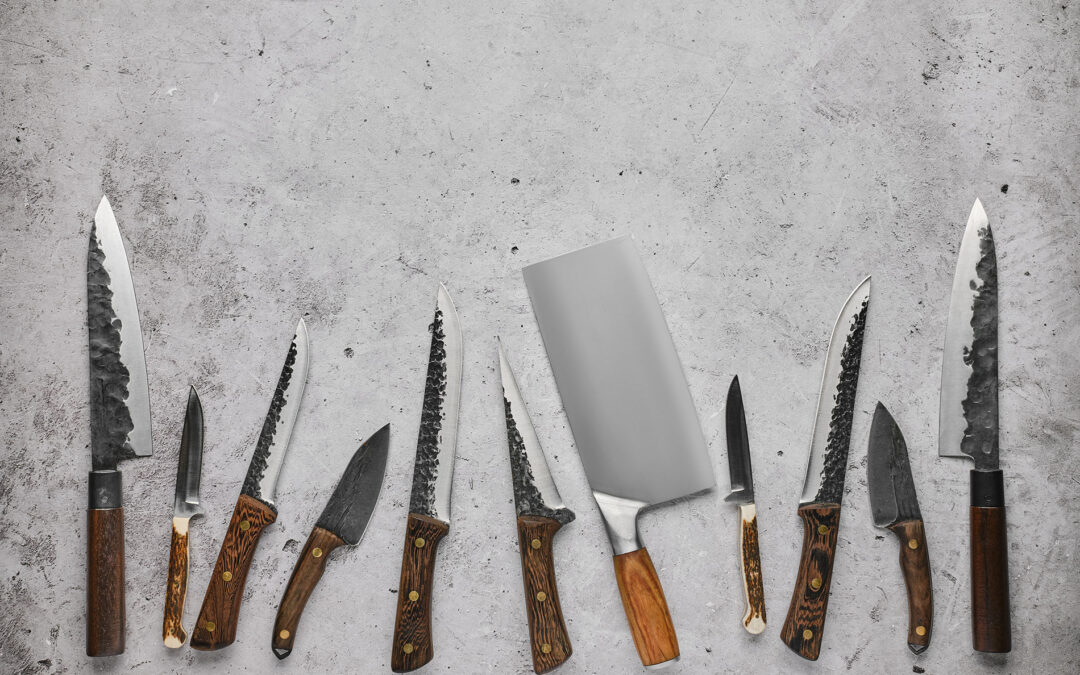
When deciding whether to pack up your kitchen without professional help, weigh the pros and cons. Choosing to pack yourself means it’s time to gear up and get started. Prioritize your kitchen, as it’s often the trickiest room to pack due to the sheer number of fragile items. You’ll face the dual challenge of dealing with many delicate items that require careful packing to survive the move unharmed.
The Risks of Packing Kitchen Knives
Before you start packing your kitchen knives, it’s vital to understand the associated risks, like potential injuries or property damage. The main hazards when packing knives include cuts from handling or accidentally dropping a knife. Always handle knives by the handles to minimize risks, and wear closed shoes. Also, pack over a table to prevent knives from falling.
First Things First: Essential Packing Supplies
Gather necessary supplies like packing paper, bubble wrap, sturdy boxes, packing tape, and markers to pack your knives safely. Use white, soft, ink-free packing paper and bubble wrap to protect the sharp edges of your knives.
Preparing Your Knives for Packing
Start by inspecting each knife and decide whether to keep it. There’s no point in moving knives that you won’t use or that are damaged. Clean and sort your knives by size to streamline the packing process. This organization helps you wrap and bundle the knives more effectively.
Packing Knives Safely
Create a packing station on your kitchen table and wrap each knife with packing paper. Bundle knives together, alternating the direction of the blades to fit them compactly. Secure the bundles with packing tape and then add a layer of bubble wrap for additional protection. Place the bundles in a box prepared with a cushioning layer of crumpled paper at the bottom.
| Packing Method | Key Steps/Materials | Pros | Cons | Best For |
|---|---|---|---|---|
| Blade Guards/Sheaths | Slip plastic/wooden/magnetic guards over each blade (or use original sheaths). Bundle if needed and place in a small box with cushioning. | Maximum blade protection; reusable; prevents dulling or scratches. | Guards cost extra if you don’t have them; not always universal fit. | Expensive or high-end knife sets |
| Individual Wrapping + Bundling | Wrap each knife in packing paper/towel, bundle similar sizes (alternate blade directions), secure with tape, add bubble wrap layer. | Cheap materials; compact; good safety if done tightly. | Time-consuming; blades can shift if not taped well. | Average household knife sets |
| Knife Block (Intact) | Tape knives securely in slots (painter’s tape), wrap entire block in paper + bubble wrap, pack in padded box. | Fastest if you have a block; keeps set organized. | Block takes up space; risk of knives slipping if not taped well. | Knives stored in a wooden block |
| Knife Roll/Bag | Roll knives into slots of a fabric/plastic roll, secure, then pack roll in a box. | Portable and organized; great protection in slots. | Need to own/buy a roll; not ideal for odd-sized knives. | Chefs or frequent travelers |
| Dish Towel Burrito | Wrap bundles in thick kitchen towels, secure with rubber bands/tape, pack in small box. | Uses items you already have; extra cushioning. | Less professional; towels can shift or get dirty. | Budget or last-minute moves |
| Always label boxes “SHARP KNIVES – Handle with Care” on all sides. Use a small, sturdy box with crumpled paper cushioning, and pack separately from fragiles. Prioritize safety—wear gloves and closed shoes! | ||||
Packing Knife Blocks
You can pack the entire set together if you have a knife block. Secure each knife in the block with painter’s tape to prevent movement. Wrap the block in packing paper followed by bubble wrap for additional protection, and then place it in a padded box.
Final Thoughts
While it’s feasible to pack your kitchen knives on your own, always prioritize safety. Consider hiring professional packers if you’re apprehensive about handling sharp blades or if time is short. Remember, choosing the best moving company, like Illuminated Moving & Packing, can ensure your belongings are packed safely and efficiently.
You might also like: The Ultimate Guide to Safely Moving Your Artwork: Protecting Your Masterpieces with Care
Contact Illuminated Moving and Packing to book your appointment!